
How Dog Photography Composition Increases Dwell Time On Social Media In The Pet Industry
- Victoria Elsmore
- May 14
- 3 min read
Professional photography doesn't JUST stop the scroll, it makes clients stay. In a split second, your audience decides whether to move on or look closer, and that decision is driven by the psychology of composition. Lets look at how composition used well in dog photography in the pet industry can increase your success as a pet brand.
The difference between a scroll-past and a pause comes down to one thing: the composition of the image. As humans our attention span has shortened. We are exposed to so much content during the course of our lives that our brains have become astute filters, subconciously deciding what deserves our attention and what does not. And this is before the "thinking brain" acknowledges anything.
This phenomenomn is especially true in the world of pet industry marketing and advertising, particularly fast-moving social media feeds, our brains make quick decisions about what deserves our attention.

In professional photography, everything within the frame is intentional. One of the first things we learn as professional photographers is that composition influences viewer psychology. Within a single frame you can trigger a pause, a journey, deliver context, messaging, trigger emotion, make a connection. Every single professional image that I have ever created has been entirely staged, considered and curated. Every aspect from the light, colour, line and framing is intentional.
Composition controls how our viewer experiences an image, it affects who our viewers are, and who we connect with. This is particularly true of leading lines, which serve to guide viewers through the frame, subtly encouraging them to explore more of the image at a speed set entirely by the direction and distribution of line.
Vertical lines that repeat across a backdrop, flatten an image and will literally force your viewers eye to travel up and down the image quickly, without pause. This tends to be anuncomfortable and aversive experience, viewers will move on quickly. Whereas curved lines when positioned correctly encourage your viewers eye to take a gentle journey through your image, taking in all of the context that surrounds the curved journey. The Gold standard in fostering a pause and consideration!
Depth and layering are also powerful tools. You can encourage a sense of immersion and therefore trigger your viewer to relate to the content more by harnessing the power of depth and layering in images, making the viewer feel like they’re part of the scene rather than just observing it. This causes the brain to slow, take more time to process the content of the image and therefore stop the scroll. This is also true of triggering emotion, depth and layering can trigger feelings of space and freedom when applied correctly.

Whilst visual tension and curiosity can be used to stop the scroll, it will always be additional compositional techniques that foster the linger for longer viewer behaviour.
Visual tension and curiosity introduces a slight imbalance, unusual framing, or an element of the unexpected, creates a question in the viewer’s mind. During that moment of curiousity the brain asks “What’s happening here?", primed for learning we linger, to solve the problem.
Eye contact and subject positioning are especially powerful in the pet industry. Images where animals appear engaged looking towards the camera trigger emotional responses and human instincts to connect. In 2015 a paper was published by Japanese scientist Miho Nagasawa (https://www.science.org/doi/epdf/10.1126/science.1261022) who found that increased eye contact between humans and dogs increased human oxytocin levels by up to 300%. Oxytocin is powerful in promoting feelings of bonding, social comfort and trust and attachment. It causes positive emotional responses. When this concept is used compositionally our viewers brains are predisposed to make positive associations with the content of the image and not only linher for longer, but engage, like and share. But this is a blog post in itself! (One that I am itching to explore in greater depth with you, because in certain circumstances eye contact can be uncomfortable and promote negative feeling, which is why it is important to ensure that you have a behaviour consultant on your side)
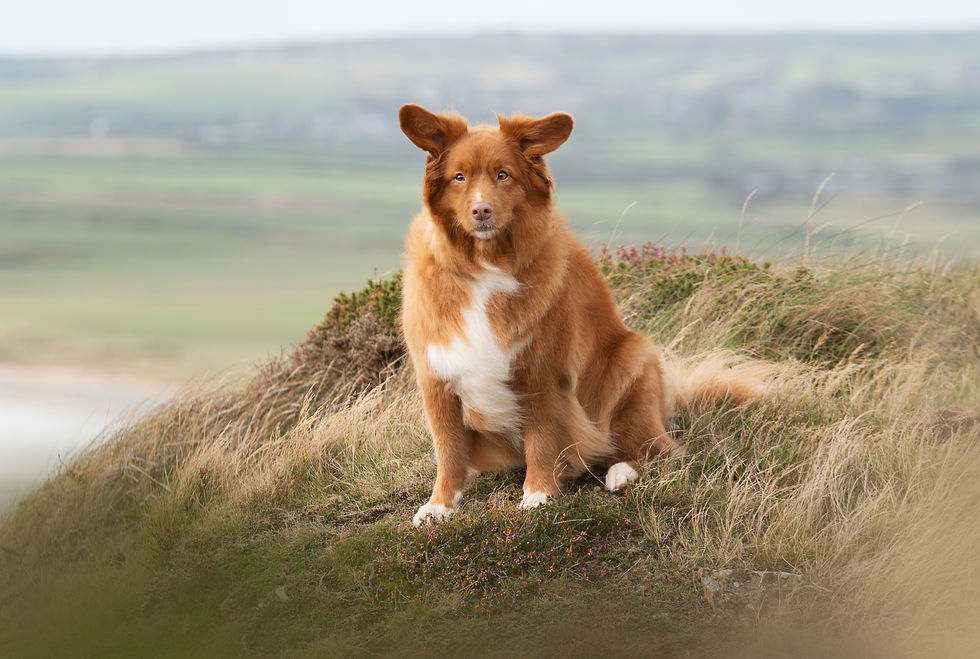
Strong composition isn't just about making an image look good. That is not what professional photographers do. We make images work. We curate the composition to ensure that they do the job that they are intended to do, composition is just one of the tools that we use for this.
If you would like to find out more about how All Tails Media can help you with visual content to engage and nurture pop us a message or book a call via the link below



Comments